


Renu Therapy's blog : The Ultimate Commercial Cold Plunge Buyer’s Guide: Benefits, Types, & Technical Selection Criteria
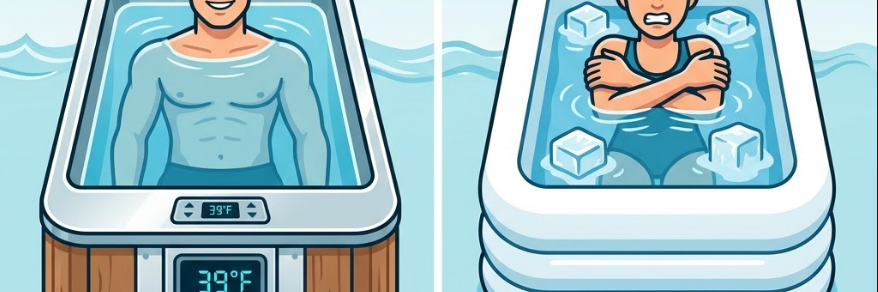
The sustained momentum of cold water therapy has transcended niche biohacking circles to become a cornerstone of modern athletic recovery and holistic wellness design. What began as an underground practice utilized by elite marathoners and high-profile combat athletes has evolved into a mainstream premium offering found in high-end home gyms, commercial fitness hubs, and dedicated recovery studios worldwide.
The widespread adoption of this practice is driven by immediate, measurable biological feedback. Whether your goal is to install the best cold plunge for home gym optimization or deploy a heavy-duty, high-traffic commercial cold plunge infrastructure for a commercial enterprise, navigating the technical landscape requires a firm grasp of both human physiology and plumbing engineering.
Science-Backed Benefits of Cold Water Therapy
Stepping into near-freezing water triggers an acute, systemic survival response that forces the human body to optimize its metabolic and circulatory functions. Far from a simple psychological test of grit, deliberate cold exposure yields distinct, clinically validated physiological advantages:
Accelerated Muscle Recovery: Cold water immersion induces rapid peripheral vasoconstriction, a process where blood vessels constrict to redirect blood flow toward vital organs. This movement assists in flushing out metabolic waste products—such as lactic acid—from fatigued muscle tissues. Clinical studies confirm that consistent post-exercise cold immersion dramatically diminishes delayed onset muscle soreness (DOMS), allowing athletes to maintain higher training volumes with reduced down-time.
Systemic Inflammation Reduction: Chronic inflammation is a primary driver of tissue degradation and delayed recovery. By lowering core body temperatures and localized skin temperatures, cold exposure down-regulates pro-inflammatory cytokines while activating anti-inflammatory pathways. This systemic shift offers powerful, drug-free relief to overworked joints, tendons, and muscular pathways.
Substantial, Sustained Dopamine Boost: Research pioneered by leading neuroscientists reveals that immersion in water calibrated to 50°F ($10^\circ\text{C}$) can trigger a profound neurochemical surge, elevating plasma norepinephrine and dopamine concentrations by up to 250%. Unlike the volatile spikes and subsequent crashes associated with pharmaceutical stimulants or caffeine, this cold-induced dopamine release features a prolonged plateau and a slow, stable decay curve. The result is hours of enhanced cognitive clarity, elevated mood, and sharp focus long after exiting the water.
Cold Plunge Tank Types: Comprehensive Architectural Comparison
The modern market offers diverse structural configurations designed to meet varying demands for space, capital expenditure, and daily usage volume. Selecting the wrong category often leads to premature equipment failure or unexpected maintenance burdens.
1. Balloonistics & Portable Tanks (Budget-Friendly)
Constructed utilizing heavy-duty drop-stitch technology or multi-layered reinforced PVC, these inflatable recovery tubs cater directly to transient users and budget-conscious buyers.
Detailed Assessment: They excel in portability, making them ideal for traveling athletes or individuals with highly fluid space constraints. However, their primary limitation lies in low passive thermal insulation. Without an attached mechanical cooling unit, maintaining low temperatures requires massive quantities of manually added ice, as ambient external temperatures will rapidly warm the standing water.
2. Chiller-Integrated Tanks (Premium & Fully Automatic)
Engineered specifically for continuous operation and high-turnover environments, these commercial-grade systems represent the pinnacle of automated recovery technology. They permanently marry heavily insulated structural vessels with dedicated refrigeration and filtration loops.
Detailed Assessment: These units offer uncompromised "set-it-and-forget-it" operation, maintaining exact temperature settings indefinitely regardless of ambient external heat loads. While they require a substantial initial capital investment and a fixed physical footprint, they eliminate daily labor, minimize water waste, and feature high-end architectural finishes suitable for premium commercial spaces.
3. DIY Chest Freezers
A grassroots alternative within the fitness community involves retrofitting standard residential appliance chest freezers into makeshift setups for an ice bath at home.
Detailed Assessment: While highly attractive from a raw material cost perspective, this route introduces significant structural and operational hazards. Because appliance freezers are built to freeze static air rather than contain hundreds of pounds of shifting fluid, they are prone to structural flexing, structural seam leaks, and profound electrical shock hazards if the unit is not completely disconnected from wall power prior to human entry. Furthermore, the complete absence of a dedicated filtration loop necessitates a constant, exhausting cycle of draining, manual scrubbing, and refilling to maintain basic hygiene.
Chiller Systems vs. Manual Ice Loading
The operational reality of your recovery routine is determined by how you choose to keep the water cold. Relying on manual ice transport vs. mechanical refrigeration alters the long-term utility and ROI of your investment.
| Operational Feature | Chiller-Integrated Systems | Manual Ice Loading |
| Temperature Consistency | Flawless Digital Regulation: Maintains a precise, pre-set temperature down to the exact degree indefinitely, regardless of back-to-back user thermal loads. | Rapid Thermal Fluctuation: Water temperatures spike immediately upon user entry and fluctuate wildly based on the volume of melting ice added. |
| Maintenance & Labor | Automated Ecosystem: Built-in loops continuously skim debris, circulate water, and run active sanitization protocols with minimal human intervention. | High Physical Labor: Requires constant manual draining, structural scrubbing, and physical hauling of heavy ice bags before every session. |
| Long-Term Operational Costs | Highly Efficient: Low, predictable daily electrical draw driven by eco-conscious compressors and dense thermal insulation layers. | Exorbitant Recurring Costs: The financial and environmental cost of purchasing or manufacturing hundreds of pounds of ice per week quickly adds up. |
| Upfront Financial Commitment | Higher initial purchase price due to specialized marine-grade plumbing and commercial refrigeration components. | Extremely low entry point, requiring only a basic containment vessel and raw ice. |
| Optimal Use-Case Scenario | Ideal for high-traffic commercial facilities, professional sports locker rooms, and dedicated daily home gym users. | Best suited for occasional, casual residential users who only plunge once or twice a month. |
Key Features to Look For in Commercial Cold Plunge Tanks
When auditing engineering specifications for a commercial cold plunge or a premium residential install, look closely at the underlying components rather than aesthetic marketing alone:
Temperature Range & Compressor Horsepower: A premium system must reliably sustain water temperatures between 37°F and 39°F ($3^\circ\text{C}$ to $4^\circ\text{C}$). For commercial settings experiencing back-to-back usage, a standard residential chiller will fail due to thermal overload. Look for a dedicated water chiller for cold plunge operations featuring a minimum rating of 1/2 HP to 1 HP (Horsepower), which ensures rapid heat extraction and quick recovery times between users.
Advanced Filtration & Sanitization Architecture: Commercial health codes and basic sanitation demand a multi-layered purification approach. Avoid setups that rely solely on simple paper mesh filters. True commercial configurations integrate a heavy-particle sediment filter alongside an high-output Ozone generator or a specialized medical-grade UV-C sterilization chamber. This dual-pronged molecular approach deactivates bacteria, viruses, and organic bio-contaminants instantly, reducing your reliance on corrosive, harsh pool chemicals.
Insulation Integrity & Shell Engineering: The thermal efficiency of a plunge tub dictates the lifespan of its cooling compressor. Look for vessels featuring closed-cell, high-density polyurethane foam injection or multi-layered, double-walled insulated stainless steel panels. Superior insulation prevents thermal bridging, ensuring the chiller compressor runs only when absolutely necessary, lowering monthly utility bills.
Ergonomics, Depth, and Footprint: Human bodies under cold stress undergo an involuntary tightening reflex. To counter this, the internal layout of the tank must allow users to fully submerge up to the collarbone without awkward joint bending. Deep, ergonomically contoured, or slightly reclined internal vessels allow plungers to fully relax their core muscles, which maximizes the therapeutic benefits of the session.
Step-by-Step Practical Guide for First-Time Plungers
Entering near-freezing water triggers a profound, instantaneous sympathetic nervous system reaction. Executing your initial plunges with structured precision minimizes cold shock risks and fosters long-term adaptation.
Conclusion: Maximizing the Return on Investment
When evaluating the acquisition of a commercial recovery asset, look past the initial price tag to analyze long-term operational friction. For commercial training centers, multi-user physical therapy clinics, or premium fitness studios, an automated, chiller-integrated commercial setup pays for itself by eliminating labor overhead, ice delivery logs, and recurring water changes. For dedicated home users, investing in a high-grade setup ensures that your daily wellness infrastructure remains sanitary, reliable, and instantly ready to perform at a moment's notice.
In:- Expert