


Lahore Centre's blog : What is the Ideal Temperature Setting for an Inverter Refrigerator?

Know the ideal temperature setting for an inverter refrigerator to keep food fresh, save energy, and maintain optimal cooling performance for every season.
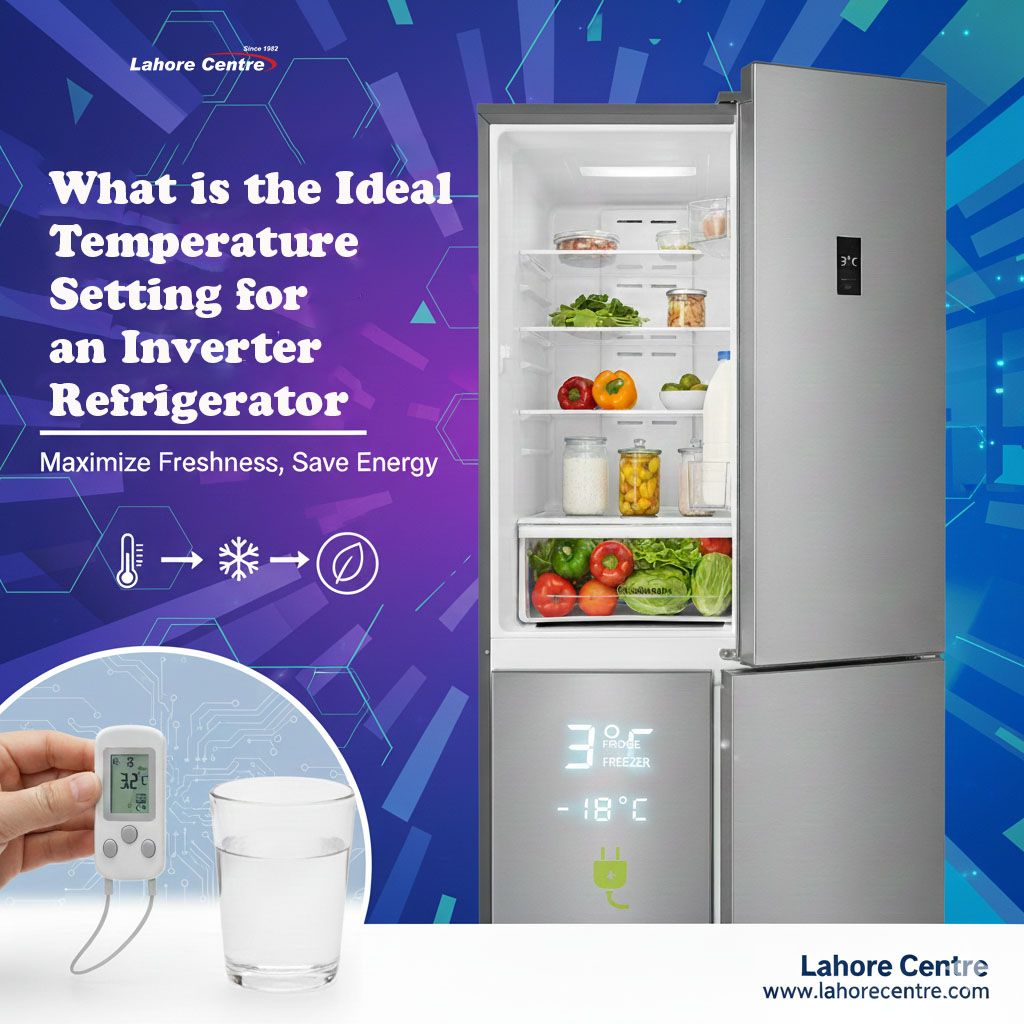
Ideal Temperature Setting for an Inverter Refrigerator
Choosing the ideal temperature setting for your inverter refrigerator is essential for food safety, energy efficiency, and long-term appliance performance. Whether you own an Inverter Refrigerator or a traditional cooling appliance, the right temperature ensures freshness and reduces electricity consumption. Modern cooling brands such as Haier, Dawlance, and PEL have integrated advanced inverter technology to give you more precise temperature control. Understanding how to set these temperatures based on food load, season, and usage habits can help you get the best performance from your fridge.
In this detailed guide, you will learn the best temperature settings for refrigerator and freezer compartments, why inverter models behave differently, how to maintain consistent cooling, and what seasonal adjustments you must make. You’ll also find useful comparisons between Haier Refrigerator, Dawlance Refrigerator, Full Size Refrigerator, and Small Size Refrigerator models so you can optimise temperature settings across all types.
Ideal Refrigerator Temperature for Daily Use
The universally recommended refrigerator temperature is 2°C to 4°C. This range keeps food fresh, prevents bacterial growth, and ensures safe storage for dairy, vegetables, fruits, and leftovers. If you are using a Haier Inverter Refrigerator, you’ll notice that temperatures remain more stable due to advanced sensors that adjust compressor speed according to internal load.
For larger families that use a Full Size Refrigerator, keeping the temperature at 3°C is ideal because the fridge door opens more frequently, increasing warm air intake. For individuals or small households using a Small Size Refrigerator, a setting of 2°C works best because compact fridges generally cool faster and maintain temperature easily.
In contrast, when you’re using a Dawlance Inverter Refrigerator, you may notice slightly different cooling patterns due to its Hybrid Cooling and Nature Lock technology. These models often perform best at 3°C to 4°C, especially when the fridge is packed with fruits, vegetables, and daily groceries.
Ideal Freezer Temperature Settings
The freezer temperature should be set at -18°C for all inverter refrigerator brands. This temperature prevents freezer burn, keeps ice cream at the right consistency, and ensures that meat, fish, and poultry remain frozen without losing nutritional value.
For your Pel Refrigerator Price model, the recommended freezer setting is also -18°C, as PEL models are designed to maintain uniform cooling even in extreme heat conditions. If you notice frost buildup, slight fluctuations between -17°C to -19°C may help improve freezer performance.
Why Inverter Refrigerators Need Different Temperature Settings
Unlike traditional single-speed refrigerators, inverter refrigerators use variable compressor speed technology. This means the compressor doesn’t turn on and off frequently. Instead, it adjusts its speed to maintain the temperature consistently. This helps reduce electricity consumption and prevents wide temperature fluctuations.
When using an Inverter Refrigerator with smart sensors, the temperature remains stable even when the door opens frequently. This stability helps maintain food freshness and reduces the risk of spoilage. Brands like Haier, Dawlance, and PEL use innovative technologies such as humidity sensors, dual inverter compressors, and cooling fans that help maintain precise temperature distribution.
If you are shopping for reliable models, Lahore Centre offers a wide collection of inverter refrigerators with efficient cooling systems. Their models are known for durability, energy savings, and modern features.
Seasonal Temperature Adjustments for an Inverter Refrigerator
The temperature needs to change from summer to winter. Here is how you can adjust your settings based on the season:
Summer Settings (High Temperature Season)
During peak summer when temperatures rise above 35°C, set your refrigerator to 2°C to 3°C. The freezer should remain at -18°C. In hotter climates, inverter compressors work harder, so maintaining these settings ensures stabilised cooling.
Winter Settings (Low Temperature Season)
During winter, the external environment is already cool. You can increase the refrigerator temperature to 4°C, and the freezer can stay at -16°C to -18°C. This reduces electricity consumption and prevents overcooling.
Monsoon/Humid Season
Humidity can affect food freshness. Set your refrigerator at 3°C, and freezer at -18°C to prevent moisture from affecting vegetables and dairy products.
Temperature Settings for Different Refrigerator Types
Different fridge types need different cooling management. Here’s how to optimise each model:
For Large Families – Full Size Refrigerator
When using a Full Size Refrigerator, the temperature should be 3°C. These models usually have larger compartments and are opened more frequently throughout the day.
For Single Users – Small Size Refrigerator
If you use a Small Size Refrigerator, a temperature of 2°C works better because the food load is low and cooling is easier to maintain.
For Hybrid and Inverter Models
In hybrid models like the Dawlance Refrigerator, settings between 3°C and 4°C are ideal, especially when using humidity-controlled drawers.
How to Know Your Refrigerator Temperature is Incorrect
Here are signs that your temperature settings may need adjustment:
- Milk spoils earlier than expected
- Vegetables become soggy or freeze
- Meat in the freezer forms excessive frost
- Water bottles don’t feel cold
- Ice cream becomes too hard or too soft
- The fridge emits unusual smells
If you notice these issues in your Haier Refrigerator or Dawlance Refrigerator, adjusting the temperature slightly can significantly improve cooling performance.
Why the Pakistani Climate Affects Refrigerator Temperature
Pakistan experiences intense summers, high humidity, and unpredictable seasonal changes. Areas like Lahore, Karachi, and Multan experience extremely high temperatures, which can affect refrigerator performance. This is why inverter technology is especially useful—it adapts to external temperature changes more effectively.
Retailers like Lahore Centre offer refrigerator models designed to work efficiently even in high heat, ensuring consistent cooling all year round.
Tips to Maintain Ideal Temperature and Cooling Efficiency
Here are practical tips to ensure your refrigerator maintains the ideal temperature:
- Keep the fridge at least 70% filled for the best cooling balance
- Avoid overloading shelves
- Leave space between food containers
- Avoid placing hot food inside
- Keep fridge doors closed as much as possible
- Clean vents and coils regularly
- Check rubber door seals for air leaks
- Use airtight containers
- Adjust humidity controls based on stored items
These tips apply to all brands, including models like Haier Inverter Refrigerator and Dawlance Inverter Refrigerator.
Energy Efficiency with the Right Refrigerator Temperature
When your refrigerator is set correctly, it consumes less power. Inverter models are already designed to save up to 40–60% energy, but proper temperature selection enhances efficiency. For example, PEL refrigerators are known for fast cooling and strong insulation, which helps maintain stable internal temperatures even in hot weather.
Choosing the right model from Lahore Centre ensures you benefit from energy-efficient technology and the best cooling performance.
FAQs
1. What is the best refrigerator temperature for daily home use?
The ideal setting is 2°C to 4°C for the fridge and -18°C for the freezer.
2. Do inverter refrigerators need different temperature settings?
Inverter refrigerators maintain temperature more consistently, but the recommended settings remain mostly the same—around 3°C for the fridge.
3. Why is my fridge not cooling properly, even at the right temperature?
Blocked vents, overloaded shelves, dirty coils, or frequent door opening can affect cooling performance.
4. What temperature is best for dairy storage?
Dairy items should be stored between 1°C and 3°C for maximum freshness.
5. Do I need to adjust the temperature in summer?
Yes. Pakistan’s summer heat requires you to lower the fridge to 2°C to 3°C for stable cooling.
6. What temperature should I keep my freezer at?
Always keep the freezer at -18°C for best results.
7. Is a small-size refrigerator good for offices or bedrooms?
Yes, a Small Size Refrigerator works well for limited spaces and should be set at 2°C.